Reading for a Long Time Makes Me Sick
Do you always experience like the light of your computer screen is burrowing into your eyes and making your caput pulse? Or feel dizzy or nauseous afterwards looking at your telephone? While you might think these sensations are just eye strain or fatigue from looking at your screen for likewise long, they're really symptoms of a condition chosen cybersickness.
These bug may seem like a necessary evil with the ascent of work from home, remote learning and days spent endlessly scrolling online. Merely I can assure yous every bit a researcher in homo computer interaction specializing in cybersickness that in that location are ways to anticipate and avoid feeling sick from your screens.
What is cybersickness?
Cybersickness refers to a cluster of symptoms that occur in the absence of concrete motion, similar to motion sickness. These symptoms autumn into 3 categories: nausea, oculomotor bug, and general disorientation. Oculomotor symptoms, like eye strain, fatigue, and headaches, involve overworking the nerve that controls eye movement. Disorientation tin manifest as dizziness and vertigo. And several cybersickness symptoms, such as difficulty concentrating and blurred vision, overlap categories. These bug can persist for hours and affect sleep quality.
People can experience symptoms of cybersickness through everyday devices similar computers, phones, and TV. For example, Apple released a parallax event on iPhone lock screens in 2013 that made the background prototype seem similar it floated or shifted when a user moved their telephone around, which many people found extremely uncomfortable. As information technology turns out, this was because it triggered cybersickness symptoms. Parallax scrolling on websites, where a background image remains static while foreground content moves as you coil, can also elicit these symptoms.
There isn't total understanding among researchers virtually why people experience cybersickness. I prevailing thought, sensory conflict theory, hypothesizes that it's from a mismatch of information perceived by the parts of the body that regulate vision and balance. Your eyes receive data that tells them you're moving fifty-fifty though your torso isn't. Everyday technology design can trigger this conflict between visual perception and concrete experience.
Cybersickness in virtual and augmented reality
Cybersickness symptoms tend to exist more than intense with virtual reality and augmented reality.
VR refers to technology that entirely blocks your view of the real world and replaces it with an immersive, artificial environment. It'south widely commercially available through popular gaming platforms similar Facebook's Oculus devices and Sony PlayStation VR. VR can result in severe levels of nausea that increase with elapsing of use. This tin brand certain applications and games unusable for many individuals.
AR, on the other hand, overlays a false environment onto the real world. These could include head-mounted devices that still allow y'all to see what'south in front end of you or something like Pokémon Continue your telephone or tablet. AR tends toward more astringent oculomotor strain.
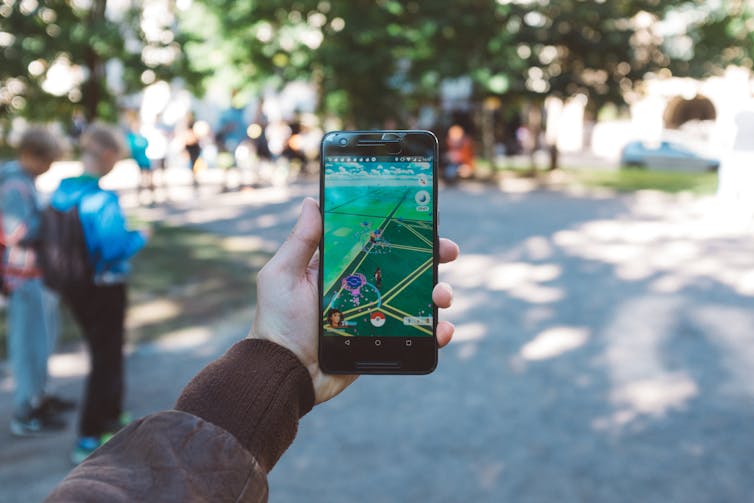
David Grandmougin/Unsplash, CC Past
Even if you lot oasis't used VR or AR devices before, chances are you will within the next 10 years. A rise in the popularity of AR and VR use volition likely trigger a ascent in cybersickness symptoms. Market place inquiry firm Research and Markets estimates that adoption of these technologies for work, education, and entertainment may grow over sixty% and reach over $900 billion by 2027.
Cybersickness symptoms could exist unsafe
While cybersickness symptoms may initially appear benign, they can have enduring furnishings lasting upwards to 24 hours after device employ. This may not seem like a large bargain at first. But these lingering symptoms could affect your ability to office in means that could prove unsafe.
For instance, symptoms like astringent headache, center strain, or dizziness could touch your coordination and attending. If these side effects persist while you lot're operating a vehicle, it could lead to a car accident. It's unclear whether the user, software visitor, or some other political party would be responsible for injuries potentially acquired by device use and cybersickness symptoms.
Not much is currently known virtually how chronic cybersickness affects daily life. Only as in that location is farthermost variability on who is more prone to motion sickness, with some upwardly to 10,000 times more than at risk, some people may be more decumbent to cybersickness than others. Bear witness suggests that women, those who don't play video games frequently, and people with poor balance may feel more severe cybersickness.
Dealing with cybersickness symptoms
If y'all are struggling with cybersickness symptoms because yous're using your computer or phone for longer periods, in that location are ways to help save the discomfort. Blue light glasses are designed to cake out some of the blue low-cal waves emitted by your device screen that can lead to eye strain and slumber irregularities. Zooming in on a screen or using larger font sizes may also help reduce center strain and brand daily piece of work more than sustainable.

stalk.T4L/Unsplash, CC BY
If yous're interested in trying VR and AR applications merely are prone to motion sickness, alarm indicators, similar Oculus Condolement Ratings, can aid you know what to expect. E'er make sure to visually calibrate devices so your eyes are as comfortable every bit possible, and use devices only in open spaces to minimize the adventure of injury if y'all become dizzy and lose your residue. Take breaks if you outset to feel any discomfort.
Using new engineering safely
The work-from-home movement has grown as a event of the COVID-19 pandemic. Many people have replaced nine-to-five's and commutes with sweatpants, bedhead, and Zoom meetings. Though the convenience is undeniable, it has as well come with an increasing awareness of how difficult it can exist to stare at a screen for 40-plus hours a calendar week.
But don't permit cybersickness get you downwardly. As researchers go on to find ways to mitigate and foreclose cybersickness beyond all devices, people may ane day be able to enjoy advancements in innovative technologies without feeling dizzy.
Angelica Jasper is a PhD Candidate in Human being Estimator Interaction at Iowa State University. This article is republished from The Conversation under a Creative Eatables license. Read the original commodity.

Source: https://www.fastcompany.com/90658011/cybersickness-too-much-screentime-makes-you-sick

Enregistrer un commentaire for "Reading for a Long Time Makes Me Sick"